
Search Engine Marketing
The Complete Guide to Growing Your Business Online in 2026
Search Engine Marketing (SEM) has become one of the most effective ways for businesses to reach customers who are actively searching for products and services online. Whether you run a small business, an eCommerce store, or a large enterprise, Search Engine Marketing helps you connect with your target audience at the exact moment they are ready to make a purchase. Unlike traditional advertising, SEM delivers highly targeted traffic, measurable results, and faster business growth.
If you are planning to build a successful digital marketing career or grow your business, understanding Search Engine Marketing is essential. In this guide, you’ll learn what SEM is, how it works, its benefits, key components, and why every business should invest in it.
What Is Search Engine Marketing?
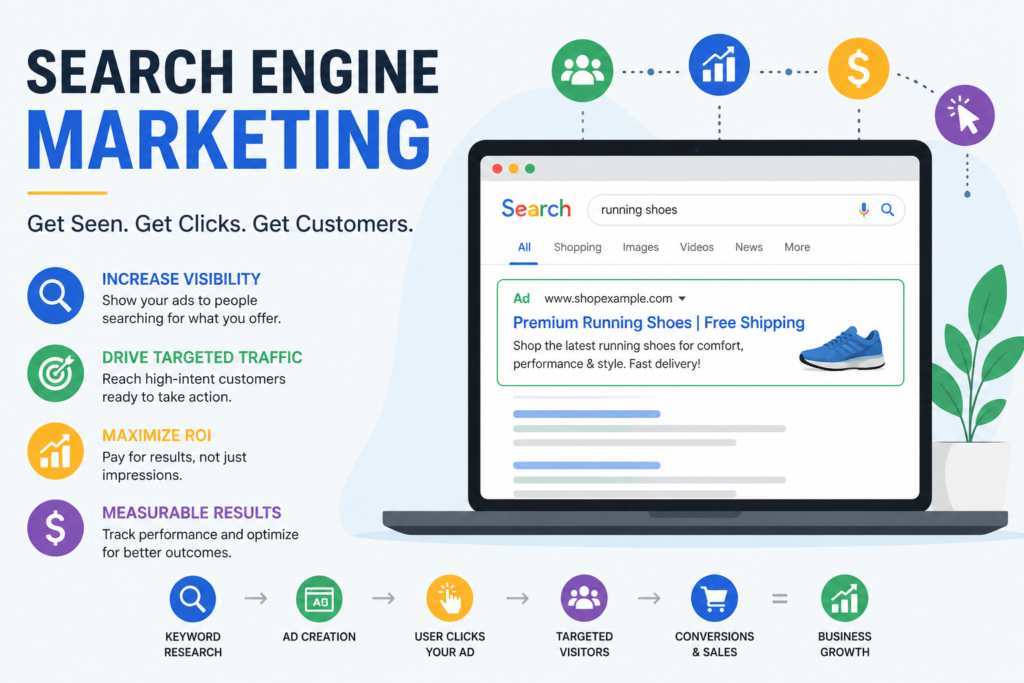
Search Engine Marketing (SEM) is a digital marketing strategy that promotes websites through paid advertisements on search engines such as Google and Bing. These advertisements appear at the top or bottom of search engine results pages (SERPs) when users search for specific keywords.
For example, if someone searches for “best digital marketing course,” businesses running a Search Engine Marketing campaign can display their ad above the organic search results. This increases visibility, website traffic, leads, and sales.
Unlike Search Engine Optimisation (SEO), which focuses on earning organic rankings over time, Search Engine Marketing delivers immediate visibility by using paid advertising platforms like Google Ads.
How Search Engine Marketing Works
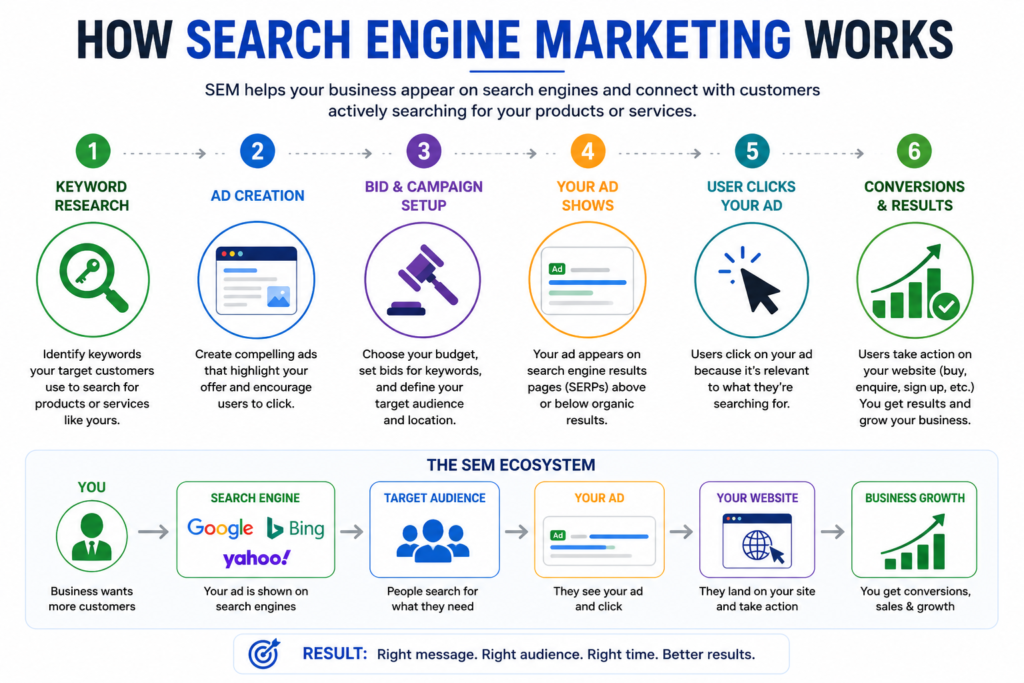
Search Engine Marketing works through keyword-based advertising. Businesses research keywords that their potential customers use while searching online. They then create advertisements targeting those keywords and bid on them through advertising platforms.
When a user enters a search query, the search engine evaluates multiple factors before displaying advertisements. These include keyword relevance, bid amount, landing page quality, and ad quality score. The advertisers usually pay only when someone clicks on their advertisement, making SEM a Pay-Per-Click (PPC) marketing strategy.
The better your campaign structure, keyword selection, ad copy, and landing page experience, the higher your chances of receiving quality traffic at a lower advertising cost.
Why Search Engine Marketing Is Important
Today’s customers search online before making purchasing decisions. Whether they need a product, service, or information, search engines are often their first destination.
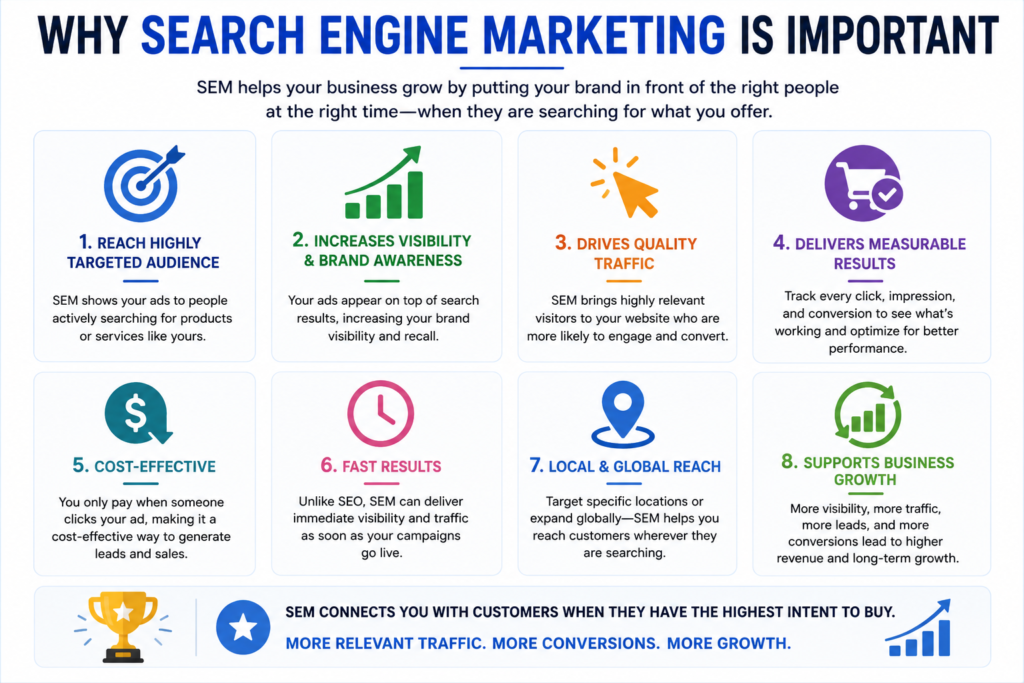
Search Engine Marketing helps businesses appear exactly where customers are searching. This creates immediate exposure, generates qualified leads, increases brand awareness, and improves sales opportunities.
Unlike many traditional advertising methods, SEM provides measurable performance. Businesses can monitor clicks, impressions, conversions, return on investment (ROI), and customer behaviour in real time.
Benefits of Search Engine Marketing
One of the biggest advantages of Search Engine Marketing is instant visibility. New websites don’t need to wait months for SEO rankings because paid advertisements can start driving traffic within hours.
Another major benefit is highly targeted advertising. Businesses can target customers based on keywords, location, device type, age, interests, language, and even the time of day. This precision ensures that marketing budgets are spent on audiences most likely to convert.
Search Engine Marketing also offers complete control over advertising budgets. Whether your monthly budget is small or large, campaigns can be adjusted according to business goals.
Another important advantage is measurable performance. Every click, lead, conversion, and sale can be tracked, helping marketers optimise campaigns for better results.
Key Components of Search Engine Marketing
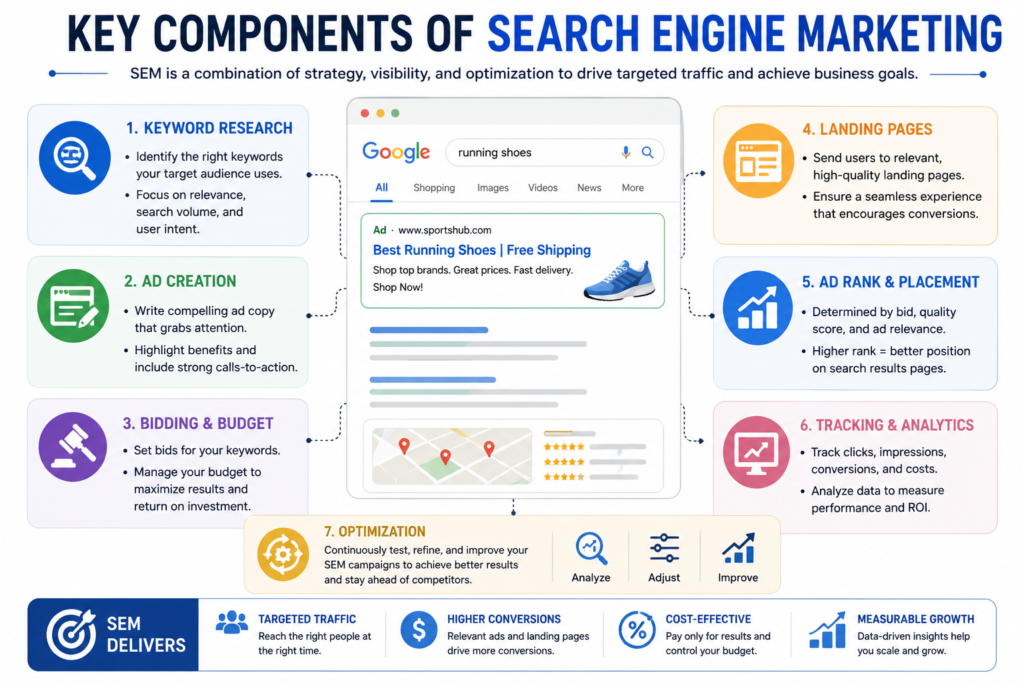
A successful Search Engine Marketing campaign depends on several important elements working together.
Keyword research is the foundation of every campaign. Selecting the right keywords ensures that your advertisements reach people who are genuinely interested in your products or services.
Compelling ad copy encourages users to click your advertisement. Strong headlines, clear descriptions, and persuasive calls to action improve click-through rates.
Landing pages must match the user’s search intent. A fast-loading, mobile-friendly landing page with relevant information improves user experience and increases conversions.
Bid strategy determines how much you’re willing to pay for each click. Smart bidding strategies help maximise conversions while controlling advertising costs.
Quality Score is Google’s rating of your advertisement’s relevance and user experience. Higher Quality Scores often reduce advertising costs while improving ad rankings.
Search Engine Marketing vs Search Engine Optimisation
Although Search Engine Marketing and Search Engine Optimisation both increase website visibility, they work differently.
Search Engine Marketing relies on paid advertisements to appear instantly in search results. Businesses pay for each click or conversion generated through their campaigns.
Search Engine Optimisation focuses on improving website content, technical performance, backlinks, and user experience to earn organic rankings naturally. SEO usually takes several months but provides long-term traffic.
The most successful digital marketing strategies combine both SEO and Search Engine Marketing. While SEM generates immediate leads, SEO builds sustainable organic growth over time.
Best Practices for Successful Search Engine Marketing
Creating a successful Search Engine Marketing campaign requires continuous optimisation rather than simply launching advertisements.
Begin with detailed keyword research and focus on keywords that match customer intent. Avoid targeting broad keywords that may generate irrelevant traffic.
Write engaging advertisements that clearly communicate your unique value proposition. Include keywords naturally within your headlines and descriptions.
Create dedicated landing pages for each advertising campaign. Ensure pages load quickly, provide relevant information, and encourage users to complete desired actions such as filling out a form or making a purchase.
Regularly monitor campaign performance using analytics tools. Identify high-performing keywords, pause underperforming ads, and optimise bidding strategies to improve ROI.
A/B testing different headlines, descriptions, landing pages, and calls to action can significantly increase campaign performance over time.
Common Mistakes to Avoid
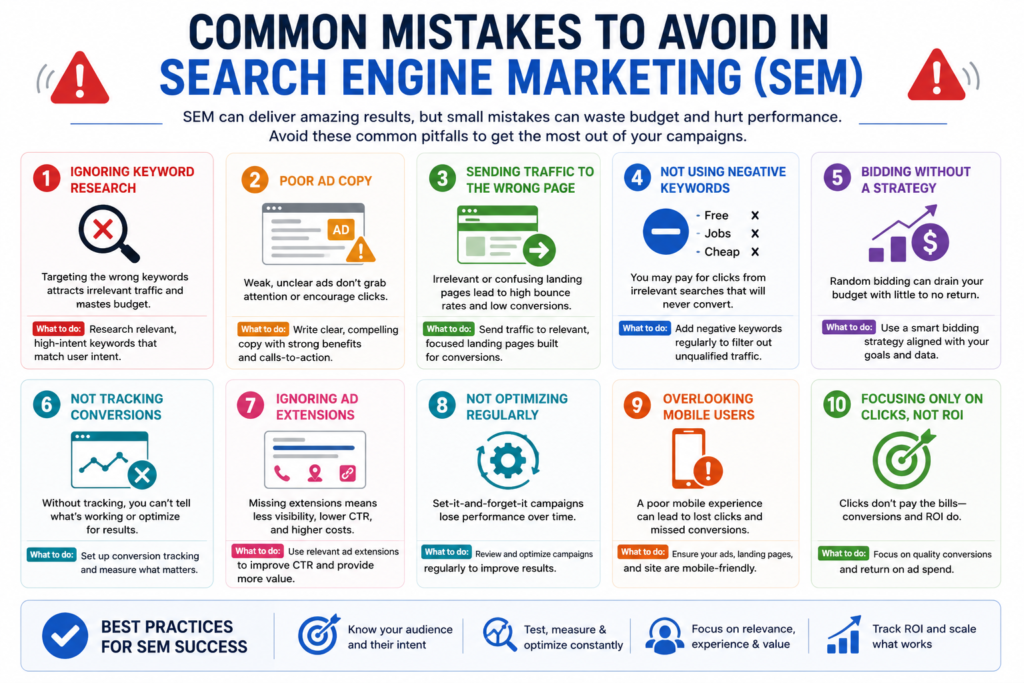
Many beginners make the mistake of targeting too many keywords without proper research. This often results in wasted advertising spend and poor-quality traffic.
Another common mistake is ignoring negative keywords. Negative keywords prevent advertisements from appearing for irrelevant searches, helping businesses save money.
Poor landing page experience is another issue. Even if advertisements receive many clicks, users will leave if the landing page is slow, confusing, or unrelated to the advertisement.
Many advertisers also fail to track conversions. Without conversion tracking, it’s impossible to determine which campaigns generate actual business results.
Career Opportunities in Search Engine Marketing
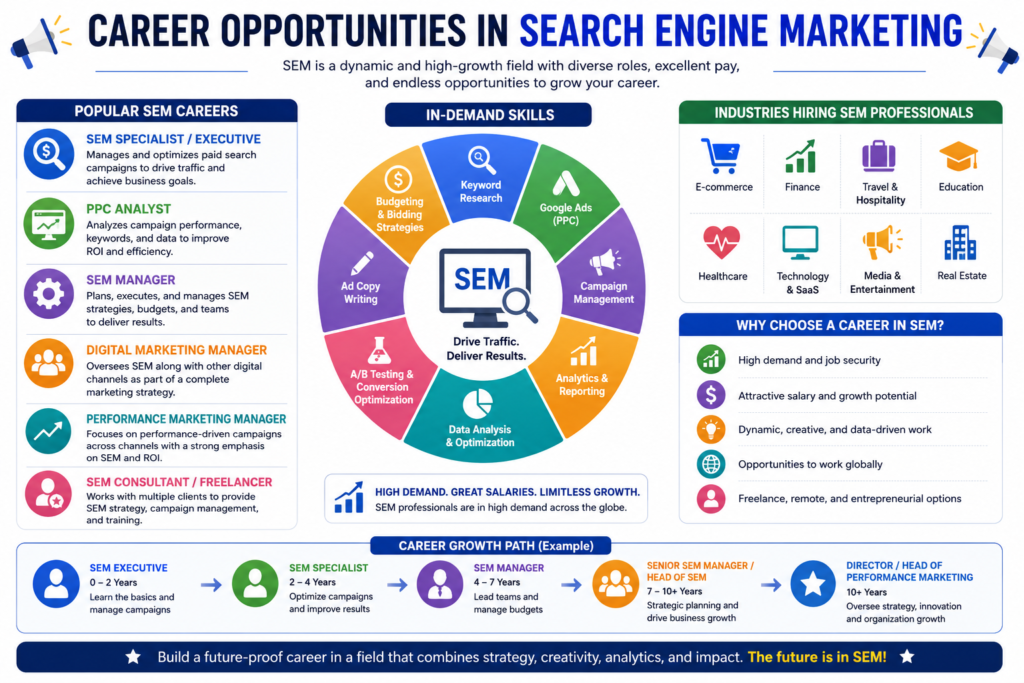
As businesses continue investing in digital advertising, demand for SEM professionals is growing rapidly. Companies require experts who can manage Google Ads campaigns, optimise PPC strategies, analyse performance data, and maximise return on investment.
Popular career opportunities include Search Engine Marketing Specialist, PPC Executive, Google Ads Expert, Performance Marketing Manager, Digital Marketing Executive, Media Buyer, Marketing Analyst, and Freelance SEM Consultant.
Learning Search Engine Marketing also enables individuals to work with international clients, build their own marketing agency, or offer freelance advertising services.
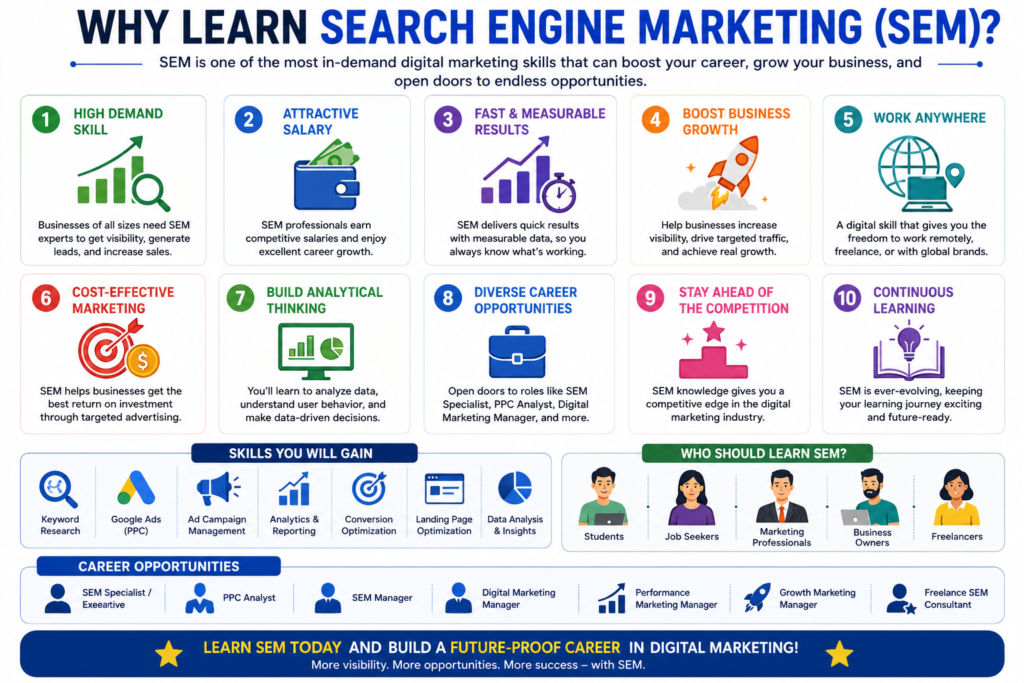
Why Learn Search Engine Marketing?
Search Engine Marketing is one of the highest-paying skills in digital marketing because businesses directly measure the revenue generated from advertising campaigns. Professionals who understand keyword research, campaign management, bidding strategies, conversion tracking, and analytics are highly valued across industries.
Whether your goal is to become a freelancer, secure a digital marketing job, or grow your own business, mastering Search Engine Marketing provides practical skills that deliver measurable results.
Conclusion
Search Engine Marketing is one of the fastest and most effective digital marketing strategies for driving targeted traffic, generating qualified leads, and increasing online sales. Unlike many traditional marketing methods, SEM offers immediate visibility, detailed performance tracking, and flexible budgeting, making it suitable for businesses of all sizes.
As competition in the digital marketplace continues to grow, investing in Search Engine Marketing is no longer optional—it’s a necessity. By learning SEM, understanding customer search behaviour, and continuously optimising campaigns, businesses and marketing professionals can achieve long-term online success.
If you’re planning a career in digital marketing or want to grow your business, mastering Search Engine Marketing will give you a strong competitive advantage and open the door to countless opportunities in the evolving digital world.